How much should a small business budget for IT? Most credible 2026 benchmarks converge on 4-7% of annual revenue as a baseline, with smaller businesses (under 50 employees) trending toward 6-7% and regulated or high-growth organizations commonly running 8-12%. Within that budget, security experts consistently recommend allocating 10-20% specifically to cybersecurity. The right number for your business comes from actual operational needs and compliance requirements, checked against these benchmarks — not the other way around.
Search "how much should a small business spend on IT" and you'll find answers ranging from 2% of revenue to 12%, cited by firms that all seem credible. That spread isn't sloppy research — it reflects genuinely different company sizes, industries, and risk profiles being folded into a single percentage. Here's what the range actually means, which part of it applies to your business, and how to allocate the number once you have it.
Why Published Benchmarks Range So Widely
Cross-referencing current 2026 sources — Gartner, Deloitte, and several specialist IT budgeting guides — the center of gravity sits at 4-7% of annual revenue for a typical small business, with the broader cited range running from roughly 2% at the conservative end up to 12% for regulated or high-growth organizations. A few consistent factors explain the spread rather than contradicting it: smaller companies spend a higher percentage of revenue on IT than larger ones, because baseline costs — security tooling, core software, a minimum level of support — don't scale down proportionally with headcount the way they do for a larger organization with more revenue to spread them across. Industry also moves the number meaningfully: regulated sectors handling sensitive data — healthcare, financial services, legal — commonly run 7-12% to meet compliance requirements that don't apply to a typical retail or professional services business. And growth stage matters too — a business scaling quickly or expanding to new locations needs to budget for infrastructure ahead of the revenue that infrastructure will eventually support, not after.
Model 1: The Revenue-Percentage Approach
The simplest, most commonly cited method: Annual IT Spend ÷ Annual Revenue × 100 = IT Budget Percentage. For a business with $3 million in annual revenue, a 4-7% baseline translates to roughly $120,000-$210,000 per year. This model is useful specifically because it scales automatically as your business grows or contracts, rather than requiring a fresh calculation from scratch — but it has a real weakness worth naming: a flat percentage applied without checking actual operational needs can both overfund a simple, low-complexity business and underfund one with real compliance or growth-driven requirements, which is why this number should be a starting benchmark, not a final answer on its own.
Model 2: The Per-Employee Approach
A useful cross-check against the revenue model: budget by headcount instead. Current benchmarks suggest roughly $1,200-$2,000 per employee annually for a micro business (1-10 employees), $1,800-$3,000 for a small business (11-50 employees), and $2,500-$4,500 for a mid-market SMB (51-200 employees) — figures that tend to rise with company size as more complex infrastructure, integrations, and support requirements enter the picture. Running this calculation alongside the revenue-percentage model and comparing the two results is genuinely useful: if they diverge significantly, that's usually a sign your business's revenue-per-employee ratio is unusual for its industry, and the more conservative of the two numbers deserves a closer look before you commit to a budget.
Adjusting for Industry Risk
Baseline benchmarks assume a business without significant regulatory exposure. If your business handles sensitive health, financial, or legal data, push toward the higher end of the range — 7-12% rather than 4-7% — since compliance requirements (documented security controls, audit logging, specific certifications) carry real cost that a general-purpose budget benchmark doesn't account for. Multi-location businesses face a similar upward adjustment, since each additional site adds network, support, and security overhead that doesn't show up in a single-location benchmark.
How to Allocate the Budget Once You Have a Number
Arriving at a total is only half the exercise — how that total gets distributed across categories matters just as much. Cross-referencing current 2026 category breakdowns, a reasonably representative allocation looks like: cloud services and infrastructure around 20-31% (the exact split between the two varies by how cloud-native your environment already is), personnel and outsourced IT support combined around 28-35%, software and SaaS licensing around 8-26% depending heavily on how many specialized tools your business runs, security specifically carved out at 10-20%, and a contingency reserve of 10-15% set aside for the failures no plan predicts — a hardware failure, an unplanned security incident response, a vendor price increase mid-year.
That security allocation deserves its own emphasis, since it's the one figure nearly every source agrees on regardless of how they diverge on everything else: 10-20% of total IT budget dedicated specifically to cybersecurity is a consistent recommendation across security-focused and general IT budgeting sources alike. If your current IT spending doesn't have a clearly identifiable security line at that level, that's worth treating as a real finding, not a rounding error.
Building Your 2026 IT Budget: A Step-by-Step Framework
- Calculate your baseline using the revenue-percentage model, and cross-check it against the per-employee model for your company size.
- Adjust for industry risk and growth plans — push toward the higher end of the range if you're regulated, multi-location, or scaling quickly.
- Allocate across categories — cloud/infrastructure, personnel/support, software, security, and contingency — rather than treating the total as one undifferentiated number.
- Benchmark against your specific industry where possible, since a professional services firm and a healthcare practice with identical revenue have genuinely different IT needs underneath a similar-looking top-line number.
- Set a contingency reserve explicitly — 10-15% of the total IT budget — rather than treating any unplanned cost as an emergency outside the budget.
- Review quarterly, not just annually. Technology costs, business needs, and threat landscapes all shift meaningfully within a single budget year; a plan set once in January and never revisited tends to drift out of alignment with reality well before the next annual planning cycle.
Common IT Budgeting Mistakes Worth Avoiding
A few patterns show up repeatedly in businesses that end up either badly over- or under-invested in technology: applying a flat benchmark percentage without checking it against actual operational needs or compliance requirements; skipping a contingency reserve entirely and treating every unplanned cost as a crisis rather than a planned possibility; building the budget once a year and never revisiting it as circumstances change; and treating security as a line item competing with other priorities rather than a protected allocation that gets funded first. None of these mistakes require more budget to fix — they require a more deliberate process for building and maintaining the one you already have.
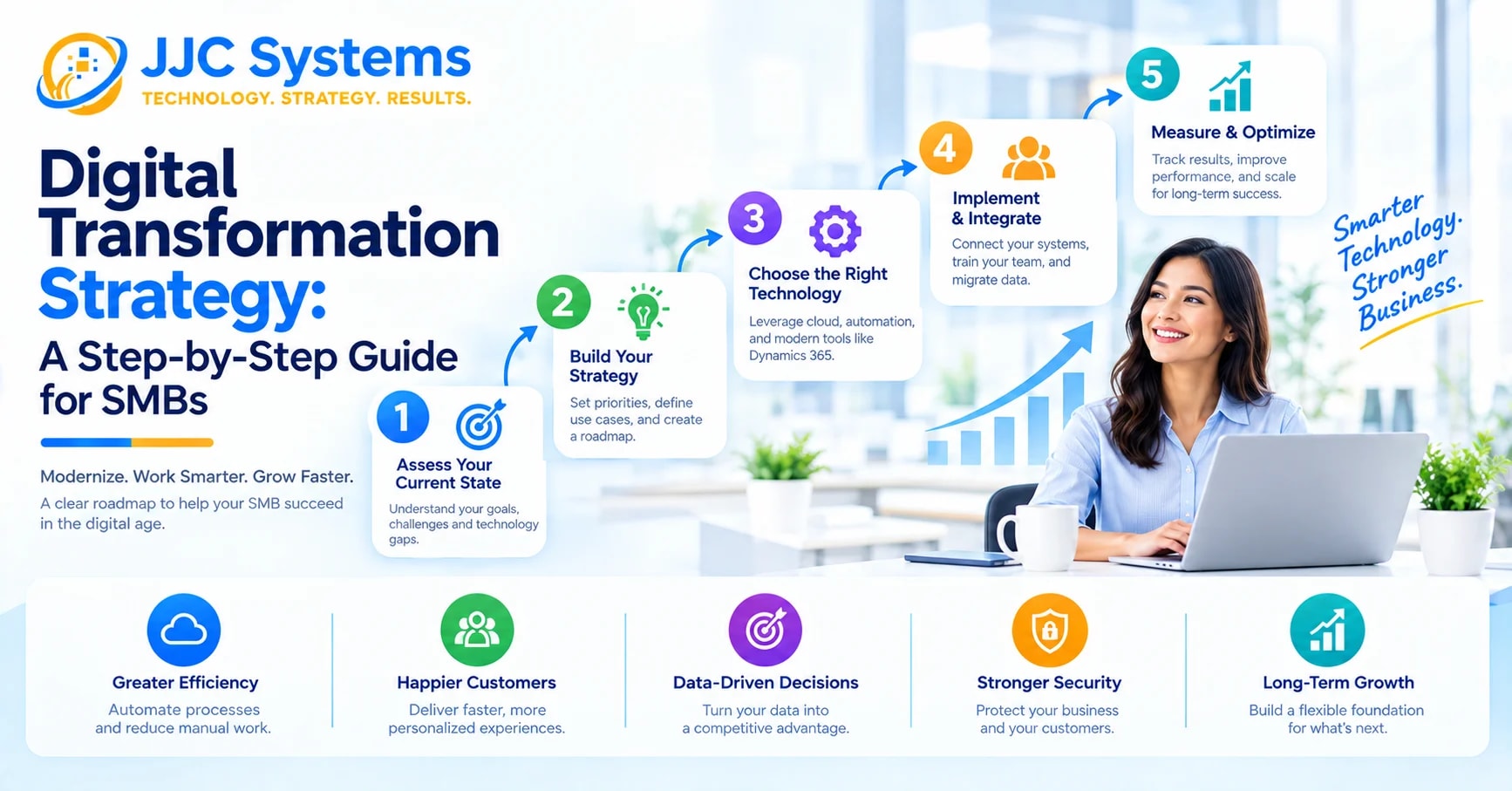
If your business is still working through a broader technology roadmap alongside this budgeting question — not just how much to spend, but what to spend it on and in what sequence — our digital transformation strategy guide covers the planning framework this budget should ultimately fund. And if nobody internally currently owns this kind of ongoing budget planning and vendor oversight, our guide to virtual CIO services covers exactly the role that typically closes that gap.
Frequently Asked Questions
How much should a small business budget for IT? Most credible 2026 benchmarks converge on 4-7% of annual revenue as a baseline. Smaller businesses (under 50 employees) trend toward the higher end of that range, and regulated or high-growth organizations commonly run 8-12%. The right number should come from your actual operational needs and compliance requirements, checked against these benchmarks.
Why do IT budget benchmarks vary so much between sources (2% to 12%)? Because they're measuring genuinely different situations under one headline percentage — company size, industry regulation, and growth stage all shift the appropriate number significantly. Smaller companies spend proportionally more, regulated industries spend more to meet compliance requirements, and fast-growing businesses budget ahead of the revenue that will eventually support that spending.
Should I use revenue percentage or per-employee budgeting? Both, as a cross-check against each other. If the two models produce significantly different numbers for your business, that's a signal worth investigating — often an indication your revenue-per-employee ratio is unusual for your industry — before settling on a final budget figure.
What percentage of my IT budget should go to cybersecurity? 10-20% of total IT spend is the consistent recommendation across security-focused and general IT budgeting sources alike — one of the few figures nearly every current source agrees on, regardless of how much they diverge on the overall budget percentage.
How much should a 25-employee company budget for IT? Using current benchmarks, a 25-employee business is often in the $67,500-$75,000 range annually, though the precise figure depends heavily on revenue, industry regulation, and location count — the per-employee and revenue-percentage models should both be run to sanity-check a single-company estimate like this one.
Should I budget more if my business is in a regulated industry? Yes. Healthcare, financial services, and legal businesses typically need to budget 7-12% of revenue rather than the general 4-7% baseline, since compliance requirements — audit logging, specific security certifications, documented controls — carry real, ongoing cost that a general benchmark doesn't capture.
How much contingency reserve should I include in my IT budget? A commonly cited range is 10-15% of the total IT budget, set aside explicitly for unplanned costs — hardware failures, incident response, mid-year vendor price increases — rather than treating every unexpected expense as an emergency outside the planned budget.
How often should an IT budget be reviewed? Quarterly is a more reliable cadence than purely annual review. Technology costs, operational needs, and security threats all shift meaningfully within a single budget year, and a plan set once in January tends to drift out of alignment with actual conditions well before the next annual cycle.
What's the most common IT budgeting mistake small businesses make? Applying a flat benchmark percentage without checking it against actual operational needs, compliance requirements, or a contingency reserve — building the number first and the justification second, rather than the other way around.
Ready to Build an IT Budget That Reflects Your Actual Needs?
A benchmark percentage is a useful starting point, but the right number for your business comes from your actual operations, compliance requirements, and growth plans — not a generic industry average. Book a free IT assessment with JJC Systems, explore our full IT Strategy & Consulting services, or contact our team to build a 2026 technology budget grounded in what your business actually needs, not just what the benchmarks suggest.