What does a virtual CIO do? A virtual CIO (vCIO) provides executive-level IT strategy — technology roadmapping, budget planning, vendor negotiation, and security governance — on a fractional, outsourced basis. Instead of a 245,000-428,000 full-time CIO salary, most small and mid-sized businesses pay 7,500-25,000 per month for the same caliber of strategic leadership, scaled to the hours they actually need.
Most small businesses don't wake up one day and decide "we need a virtual CIO." It happens more gradually and less obviously than that: technology decisions start taking longer, nobody's quite sure whether the next software purchase actually fits where the business is headed, and IT spending feels reactive rather than planned. That gap — not a lack of technical support, but a lack of strategic ownership over technology decisions — is exactly what a vCIO is built to close.
What a Virtual CIO Actually Is
A virtual CIO is an experienced IT executive who provides strategic technology leadership on a part-time, fractional, or retainer basis — delivering the same roadmapping, budget oversight, vendor management, and security governance a full-time Chief Information Officer would provide, without the six-figure salary, benefits, and equity that come with a permanent C-suite hire. Sometimes called a fractional CIO, outsourced CIO, or "CIO on demand," the model exists specifically for organizations that need executive-level technology direction but don't have — and often genuinely don't need — a full-time person sitting in that seat.
What a vCIO Actually Does, Day to Day
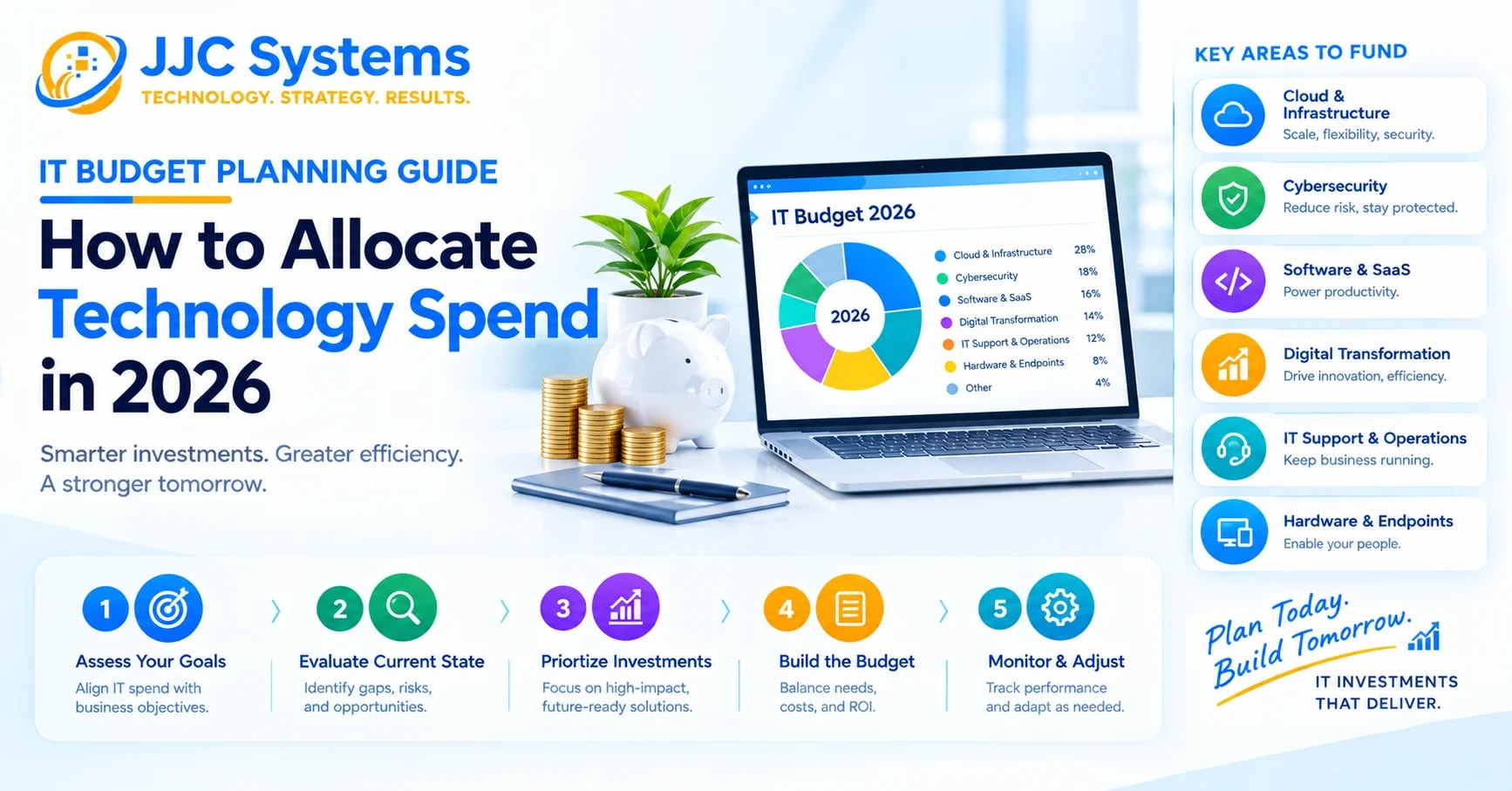
Strip away the executive title, and a vCIO's real work breaks down into a handful of concrete functions: building and maintaining a multi-year technology roadmap that aligns tools and infrastructure with actual business objectives, not just replacing what's aging out; managing the IT budget as a planned investment rather than a series of reactive purchases; handling vendor negotiations to make sure the business is getting fair pricing and terms rather than accepting whatever a sales rep proposes; and setting cybersecurity and compliance direction at a strategic level, even when day-to-day security operations are handled elsewhere. Most vCIO engagements also include a regular cadence — commonly a structured set of hours each month, plus quarterly business reviews with leadership — rather than an occasional check-in whenever something urgent comes up.
vCIO vs. Managed IT Services: Different Altitude, Not Overlapping Roles
This is the distinction that trips up the most businesses evaluating a vCIO for the first time. Managed IT services handle the day-to-day operational layer — help desk support, patching, monitoring, backups, the tickets that come in when something breaks. A vCIO operates one level up: deciding which systems the business should be running in the first place, and why. A vCIO doesn't replace your IT team or your MSP — they set the direction; the IT team or managed services provider executes it. Many businesses run both simultaneously, precisely because they answer different questions: "is this working right now?" versus "is this the right thing to be running at all?"
vCIO vs. a Traditional IT Consultant
The difference here is relationship depth, not expertise. A one-time IT consultant comes in, diagnoses a specific problem, makes a recommendation, and leaves — valuable for a defined project, but without ongoing context about how your business actually operates. A vCIO relationship builds institutional knowledge over time: understanding your business strategy, your growth trajectory, your team's actual capabilities, and how previous technology decisions played out — context a one-time consultant simply can't replicate no matter how skilled they are. Every vCIO conversation, done well, starts from your business strategy and works backward to technology, not the other way around.
What It Actually Costs
Glassdoor's July 2025 compensation data put typical full-time CIO pay at $245,000 to $428,000 annually — before benefits, bonuses, or equity are factored in. Virtual CIO services typically run $7,500 to $25,000 per month, depending on company size, scope, and how frequently the vCIO is engaged — landing most businesses at roughly 20-40% of the cost of a full-time hire for comparable strategic leadership. For a business with fewer than 20 employees specifically, the model scales down further: a few structured hours a month of high-level direction, with availability when an actual decision point comes up, rather than a full retainer-level engagement.
It's worth framing this cost against what the alternative actually risks, not just against a full-time salary. The financial exposure from a single serious incident — a breach, extended downtime, legal liability, ransomware — routinely exceeds what a full year of vCIO services would have cost, which reframes this less as a discretionary expense and more as a structural risk-reduction investment.
Signs Your Business Has Outgrown "No One Really Owns IT Strategy"
A few patterns show up consistently in businesses that end up bringing on a vCIO: technology decisions get made reactively, purchase by purchase, with no roadmap tying them together; IT spending feels unpredictable rather than planned against a budget; nobody internally can clearly explain why the business is running the specific mix of systems it's running today; cybersecurity feels like something being reacted to rather than governed proactively; and growth has started outpacing the business's confidence in the systems supporting it. None of these individually is an emergency — together, they're a fairly reliable signal that technology decisions have outgrown ad hoc handling.
This Is a Mainstream Category, Not a Trend
It's worth noting for anyone wondering whether this is a legitimate, durable service model or a passing consulting trend: the virtual CIO market was valued at roughly $600.6 million in 2025 and is projected to grow at a steady 4.6% annually through 2033. That's not explosive, hype-cycle growth — it's the profile of a maturing, mainstream response to a structural gap that hasn't gone away as remote work, cybersecurity complexity, and AI adoption have all raised the strategic stakes of getting technology decisions right.
Frequently Asked Questions
What does a virtual CIO do?
A virtual CIO provides executive-level IT strategy — technology roadmapping, budget planning, vendor negotiation, and security governance — on a fractional, outsourced basis. They decide what technology the business should be running and why, while your IT team or managed service provider handles day-to-day execution.
How much does a virtual CIO cost?
Typically $7,500 to $25,000 per month, depending on company size and scope — roughly 20-40% of the cost of a full-time CIO, whose 2025 compensation averaged $245,000 to $428,000 annually before benefits and bonuses.
What's the difference between a vCIO and managed IT services?
Managed IT services handle daily operations — help desk, patching, monitoring, backups. A vCIO operates at a strategic level, deciding which systems the business should run and how technology aligns with business goals. Most businesses that use a vCIO also maintain managed IT services or an internal team for day-to-day execution.
Is a virtual CIO the right fit for a business with fewer than 20 employees?
Often, yes, scaled appropriately. Smaller businesses typically engage a vCIO for a few structured hours a month of high-level direction, plus availability when a real decision point arises, rather than a full enterprise-level retainer.
How is a vCIO different from a CTO?
A vCIO focuses on IT operations strategy, infrastructure planning, cybersecurity governance, and business-technology alignment. A CTO role, where it exists separately, more often centers on product and engineering direction. For most small businesses in services, distribution, or professional sectors, a vCIO is the more directly applicable role.
Does a vCIO replace my current IT provider or internal IT staff?
No. A vCIO doesn't manage day-to-day IT operations — they set strategic direction that your existing IT team or managed service provider then executes. The two roles are complementary, not redundant.
How is a vCIO different from hiring a one-time IT consultant?
A vCIO is an ongoing strategic partner who develops and manages your technology roadmap over time, building institutional knowledge of your specific business. A one-time consultant diagnoses and recommends for a defined project, then leaves, without that accumulated context.
What are the clearest signs a business needs a vCIO?
Reactive, unplanned technology purchases; unpredictable IT spending with no budget roadmap; nobody able to explain why current systems were chosen; cybersecurity handled reactively rather than governed proactively; and growth outpacing confidence in the systems supporting it.
Ready for Strategic IT Leadership Without the Executive Salary?
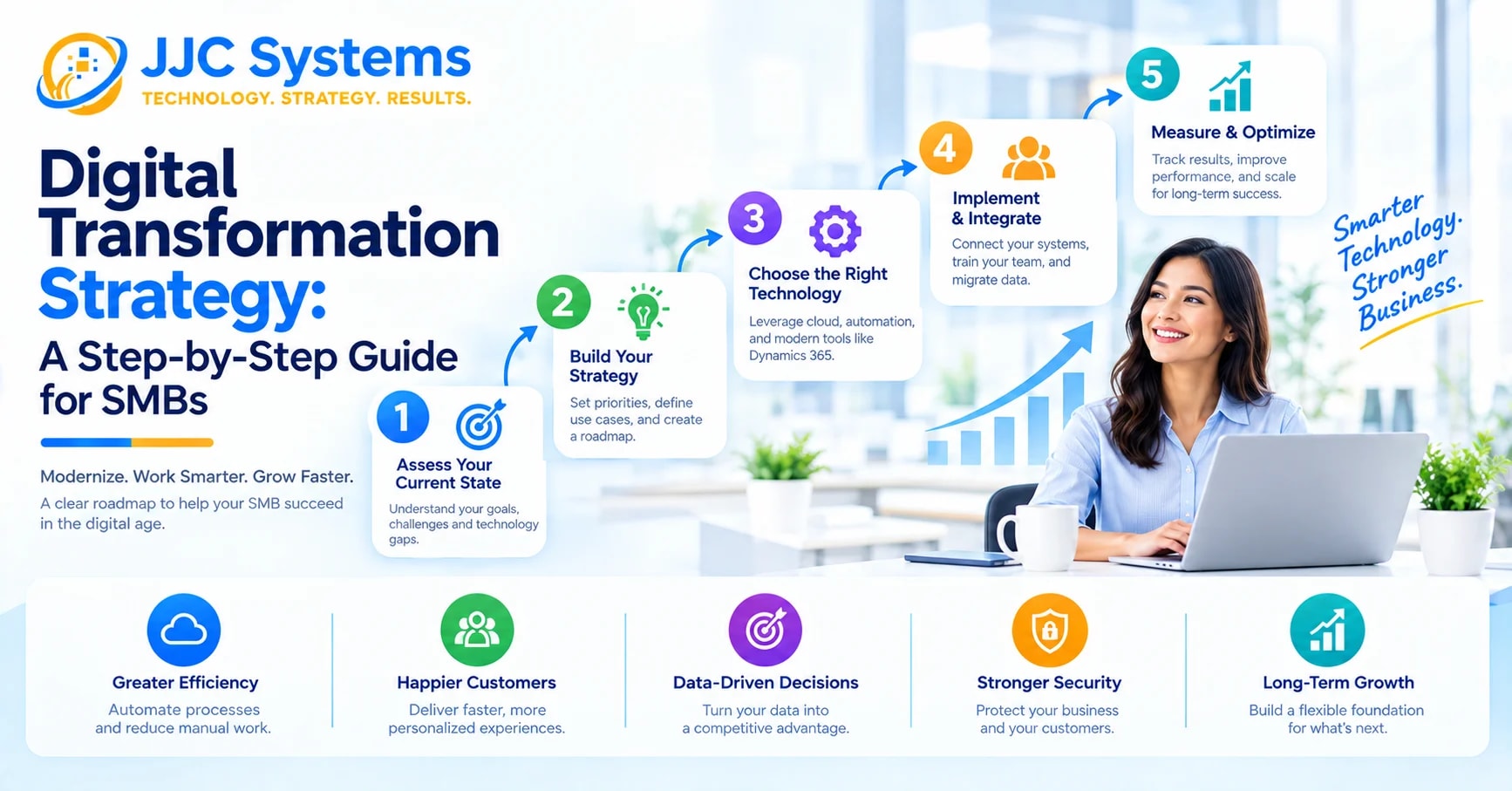
If technology decisions at your business have started feeling reactive rather than planned, that's usually the clearest sign a vCIO relationship would help. Schedule a consultation with a JJC Systems specialist to talk through what fractional CIO support would look like for your business, explore our full IT Strategy & Consulting services, revisit our digital transformation strategy guide if you're mapping a broader roadmap alongside this decision, or contact our team with questions.